¶ dnbstep | Drum and Bass Dance Wiki
¶ History of DnB Dance
The history of the DnB step is not well documented and is primarily based on anecdotal accounts.
¶ Pre-history
Before evolving into its current form, the dance featured a more top-rock–centric junglestep style.
¶ Szmess as a Possible Originator of the X-Outing Dance
Based on information from the now-extinct site Step-pedia, which detailed the origins of the dance and offered lessons on various moves, it is believed that the dancer Szmess is considered the father of modern DnB dance. Szmess was born in Hungary, establishing the country as a significant birthplace of the dance.
¶ Conflicting Statements
Some accounts note that Szmess never explicitly confirmed his role as the founder.
¶ Club Kultiplex
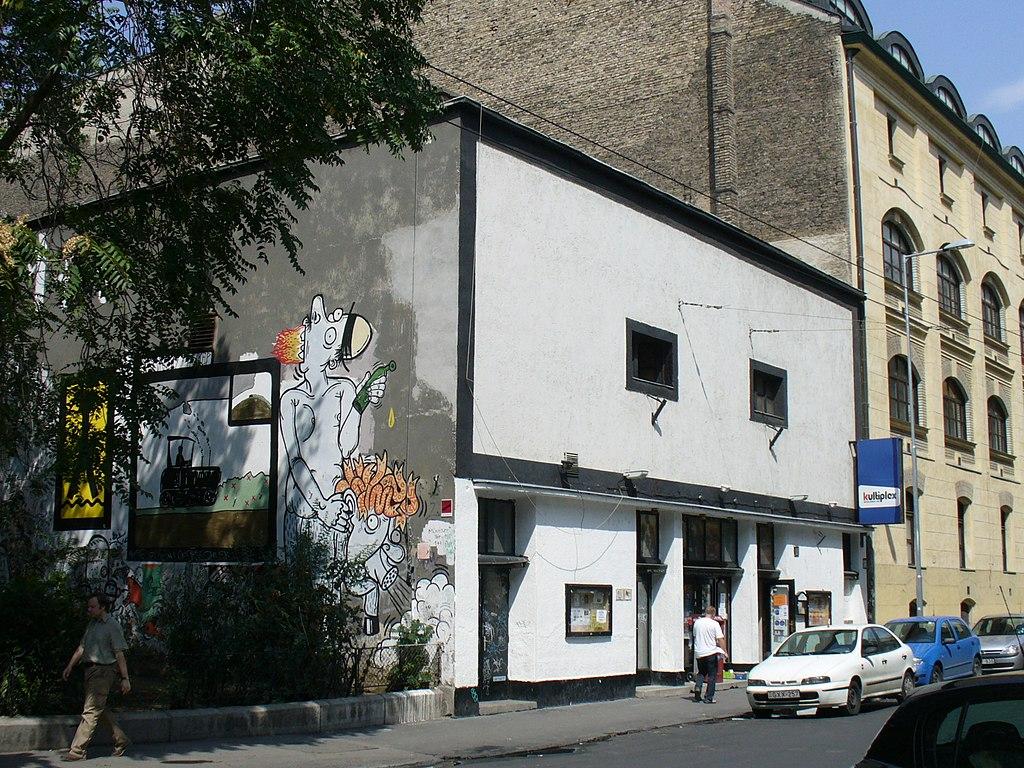
Club Kultiplex, a nightclub in Hungary, is reputed to be the birthplace of the dance, dating back to around 2004–2006.
¶ X-Outing
¶ Origins (2006)
X-Outing was reportedly invented in Hungary in 2006 at Club Kultiplex, drawing inspiration from traditional Hungarian folk dance movements. The true inventor remains unknown. Dancers such as Gizmo, Atee, and others recognized that this dance was particularly suited for club environments. In a humorous twist, they produced a video as part of a "YouTube team," which quickly gained popularity.
The Gerdels team video notably captures the atmosphere of DnB dance culture from 2006 to 2007.
- Channel with some old videos: https://youtube.com/@CTAPOE
- YouTube team video: https://youtu.be/gfTwVtPojaM?si=pU57LmJkTn9TCfNk
- Szmess video: https://youtu.be/7F-G1g5ZcBY?si=6RC1QWyzNSlObWTh
¶ 2008/09
The first DnB dancers in Russia emerged in 2007, with many learning the dance from Hungarian practitioners. The style spread rapidly, and by 2008, Russian dancers began organizing DnB meetings.
In Saint-Petersburg, one of the earliest dancers was Neuroock, who led a DnB dance school and organized meetings until his passing. In the video DREAMKILLER, Neuroock incorporates distinctive hand movements into his routine—especially around 03:08—even as he also performs another style known as Oldschool (Junglestep).
Neuroock's friend, Miss Smile, went on to organize Monster Dance Crew (MDCrew), which became one of the most skilled DnB dance teams, led for an extended period by MrWild.
In Moscow, several dancers emerged, with Kakoc and Nepster gaining significant popularity. They organized DnB dance meetings at Manezhnaja Square, and DnB battles were featured at the Pushkino Dance Fever Festivals (PDFF).
Nepster produced a popular tutorial on his style—unofficially known as "Panda Style." Although this style was originally created by an individual from Vladimir, Russia, Nepster also performed it.
Simultaneously, the website dnbdance.ru emerged, led by dancers Nikki Ewart, Vairus, and Max_Volk. Users of dnbdance.ru accused the "Manezhnaja dancers" of being overly aggressive, while the "Manezhnaja" dancers claimed that no one on dnbdance.ru could dance. Additionally, Vairus created a renowned three-part course on DnB dance that became widely used as a learning resource.
A significant highlight of 2009 was the video Double Dance Power. During this period, the emphasis shifted toward developing a unique "personal style."
- DnB Meeting with Neuroock: https://youtu.be/QSb_ERVaGLA?si=VLNICdxorthUQVWH
- DREAMKILLER Video: https://youtu.be/e4FeFbIxsAo?si=R54NmGHNM6YfEy_I
¶ Tutorials from This Period
- Vairus’ Three-Part Tutorial:
- Nepster’s Tutorial: https://youtu.be/XUTIT2dsKDU?si=W5EljKYRD8w8JxUT
- Kakoc’s Tutorial: https://youtu.be/LudaaDUOwhE?si=jbF73VLAv0r-nYsY
¶ 2010
In 2010, two primary schools of DnB dance emerged in Russia:
- The Kakoc and Tza schools in Moscow.
- MDCrew in Saint-Petersburg.
MDCrew focused on developing their own interpretation of the DnB step. Dancer Elestrago crafted a distinct style that received mixed reactions from his peers, while MrWild’s approach was often dubbed "ballet" due to his distinctive spins and rotations.
The teams led by Kakoc and Tza, along with the Zeta525 crew, became some of the most popular in the scene. In Ulyanovsk, dancer Fooki gained recognition among younger dancers. The website dnbdance.ru produced various videos, experimented with new techniques, and organized tournaments. Meanwhile, the VK group The Place of Drum and Bass emerged as the epicenter of the DnB community, with a strong emphasis on intricate tricks and technical precision.
¶ 2011–2014
Between 2011 and 2014, the DnB dance community experienced a period of increasing toxicity, despite significant advancements in the dance form.
During this time, the center of DnB dance shifted to Bryansk, where dancers such as Nice and Crystal emerged. In Ukraine, dancer Plageat introduced the "Bracket" movement—incorporating elements of Jumpstyle—which quickly became popular. The VK group The Step of Drum and Bass served as a central hub for the community, with musicality and precise beat counting becoming critical. Additionally, the influence of the "Triangle" style grew, as proponents of the Vengr Triangle style took on leadership roles within the group.
¶ Dormant period
¶ European developement
¶ Styles
For additional styles or variations, please refer to the Styles page for more information.